
What are the best hikes in Europe? To help you find the answers to this question we created this list of the most beautiful hiking trails in Europe. Because, hopefully, all this COVID-19 situation will improve soon, and we will be able to travel again later this year. And what a safer way to travel if not on foot and away from the crowds.
Not only is hiking a great way of exploring the country you are visiting and building up your endurance, but it’s also a great way to distance yourself from others and enjoy nature.
But while you are waiting for the summer to arrive and for restrictions to lift, check out this list with the best multi-day and the best short hikes in Europe.
Best Hikes in Europe
The Camino de Santiago (Spain, Portugal, France)
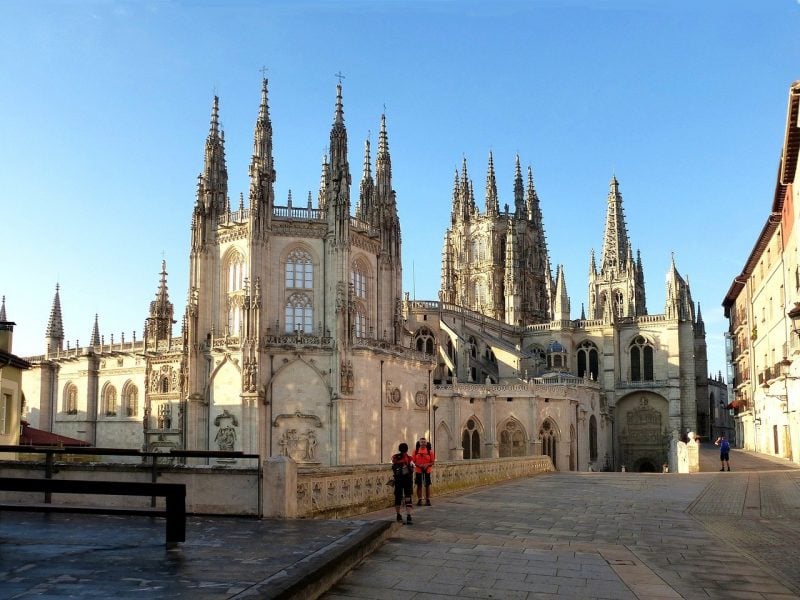
The Camino de Santiago, or the Way of Saint James, is an important Christian pilgrimage and a very popular hike in Europe. It consists of a network of paths, with the Spanish routes being the most popular.
The final destination for all the routes is Santiago de Compostela, the capital of northwest Spain’s Galicia region. The pilgrimage ends in the shrine of the apostle Saint James the Great in the cathedral of Santiago de Compostela. The majority of Way of Saint James routes take at least a month to complete, but it’s possible to do only a part of the way. Two weeks, a week, or even just a couple of days. If you are really short on time, you can go on various day hikes along the Camino route.
There’s also an extension of the trail The Camino Finisterre ending up at the Atlantic. It takes additional 3-4 days.
The French Way (Camino Francés) and the Routes of Northern Spain are listed on the World Heritage List by UNESCO.
Pilgrims and hikers stay in Albergues (accommodation with bunk beds as well as private rooms) on the way and cook their own food in the Albergues. Countless family-run restaurants and cafes serve hearty meals.
Walking the Camino de Santiago is definitely among the best things to do in Spain (link to Spain article), as Spanish routes have very diverse landscapes (from mountains to the ocean), pass through picture-perfect little towns and tranquil villages.
Tour du Mont Blanc (France, Italy, Switzerland)
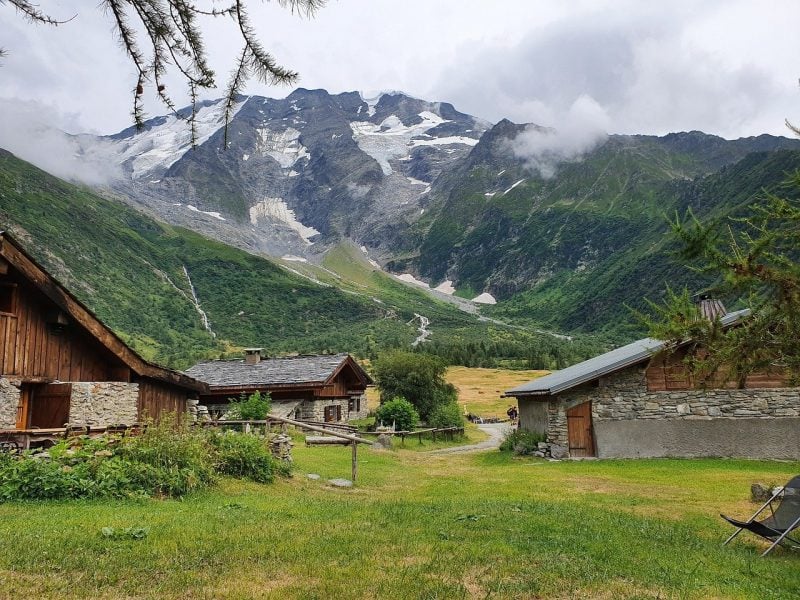
The Tour du Mont Blanc (TMB) is a long-distance trail that stretches 170 kilometres through 3 countries: France, Italy and Switzerland. It is one of the best hikes in Europe and one of the most famous long-distance treks in the world as well.
At the height of 4808 m, Mont Blanc is the highest mountain in the Alps and Western Europe. It is the second-highest and second most prominent mountain in Europe. The TMB route encircles the Mont Blanc Massif and it passes through seven valleys around the massif.
The route is circular, and it normally takes around 11 days to complete it.
The trail passes through mountains, forests, tiny villages, wildflower fields and pastures dotted with herds of grazing sheep.
There are hotels and mountain huts along the route. Or, you can do it self-sufficiently — you carry your own food and camping gear.
The accommodation is open only from June until September. Book your stay in advance, especially if you are hiking during the high season — mid-July to mid-August.
If you don’t want to hike the TMB which takes 11 days to complete, there are plenty of other, much shorter, hikes all around Mont Blanc massif.
Kungsleden (Sweden)
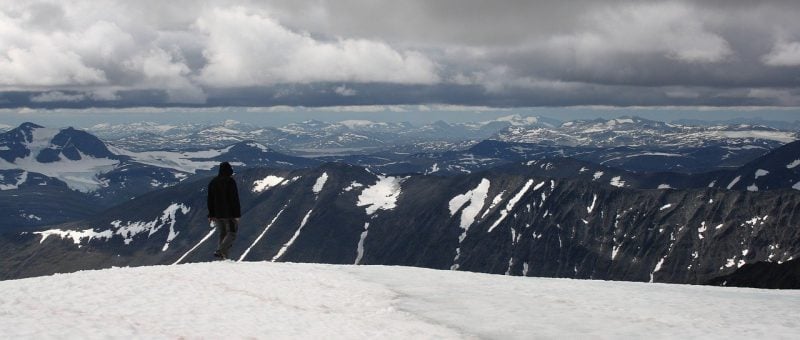
Kungsleden is a 440 km long hiking trail between Abisko and Hemavan. Also known as the King’s Trail, the Kungsleden trail is one of the best hikes in Europe and one of the best things to do in Sweden (link to Sweden article).
The trail passes through different landscapes of Lapland in Northern Sweden. It goes through four national parks: Abisko, Stora Sjöfallet, Sarek and Pieljekaise. Kebnekaise is the highest mountain in Sweden (at 2098 m), and one of the points of interest along the route.
With its Europe’s wildest landscapes, striking glacial valleys, beautiful rivers, fairy tale lake landscapes and, of course, snowy peaks, Kungsleden is arguably one of the most beautiful treks in the world.
Lying mostly within the Arctic Circle, it is best walked between late June and early September. There’re plenty of areas where you can pitch your tent and huts run by the Swedish Tourist Association. It takes about a month to complete the route.
If you don’t have that much time, take the Abisko-Nikkaluokta stretch, the most popular part of the Kungsleden Trail.
Laugavegurinn (Iceland)
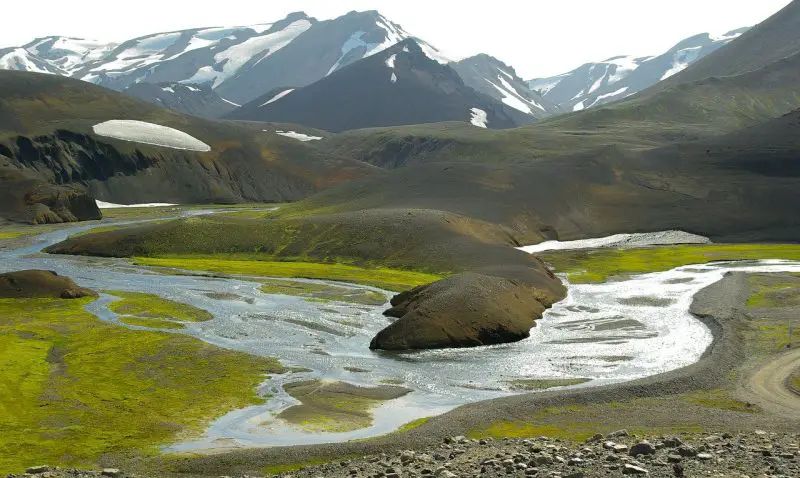
Laugavegurinn is a long-distance trail in southern Iceland (link to Iceland article), running from the Landmannalaugar geothermal springs to the Þórsmörk nature reserve.
The trail is known for its wide variety of landscapes — colourful rhyolite mountains, lava fields, volcanic deserts, clear lakes, snowfields, hot springs and lush forests.
Thanks to all this beauty, in 2012 National Geographic has listed it as one of the 20 best trails in the world.
The length of the Laugavegurinn hike is 54 km, and it takes around 4 days to complete the route. It’s a one-way trail.
There are basic accommodation huts en-route, or you can camp.
If you decide to stay in the huts, book well in advance.
Trolltunga Hike (Norway)
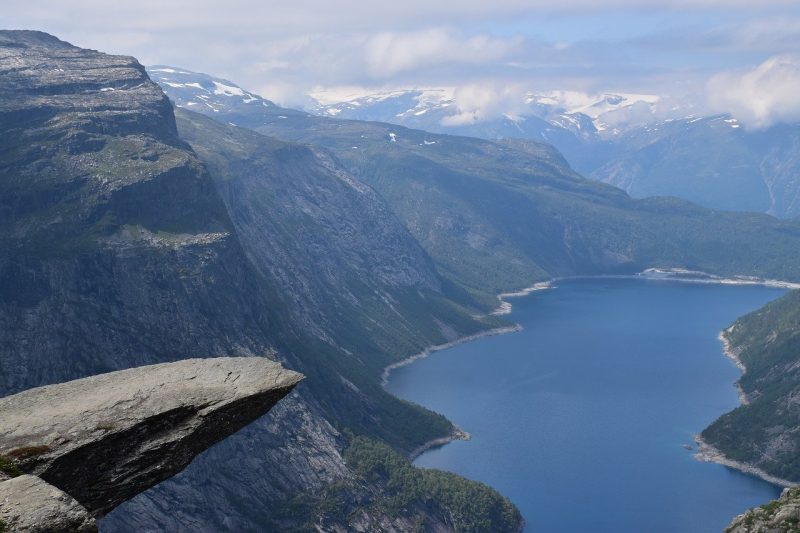
Trolltunga (Troll tongue) is a thin rock formation that juts horizontally out from the mountain. It is situated about 1100 metres above sea level and is positioned 700 metres above the lake Ringedalsvatnet, in Norway (link to Norway article).
The only way to get to Trolltunga is to hike. And it is one of the most popular and busiest hikes in Norway, and among the best hikes in Europe.
Unlike other hikes on this list, Trolltunga hike is a day hike.
The length of the hike is around 28 km (both ways), and the starting point is near Skjeggedal. It takes 9 to 12 hours, depending on where you start: from Skjeggedal parking lot, or 4 km further, from the entrance to the trail. To save time and energy, you can take the shuttle bus from the parking lot to the trail starting point and skip the road altogether.
What makes the Trolltunga trail so popular? It’s impossibly scenic and can be easily reached from Bergen and Odda, even by public transport. On the trail, you’ll see landscapes that are typical to Norway – fjords, lakes, snowcapped mountains, glaciers, desolate plains and cliffs.
Remember, Trolltunga is a rather exhausting day hike.
Plitvice Lakes National Park Trails (Croatia)
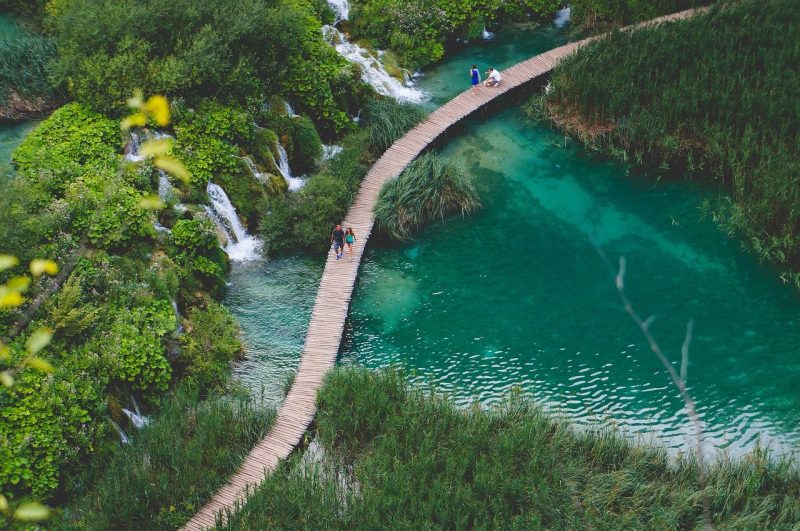
Plitvice Lakes National Park is known for its beautiful cascades and dramatic lake landscape.
Set in the heart of Croatia, the park consists of 16 interconnecting lakes surrounded by woods. The lakes vary in colour from deep blue to grey to emerald green to turquoise, based on the mineral content of the water and the time of the year.
These lakes are not large, but the landscape is spectacular nevertheless.
Due to its geological and ecological values, Plitvice Lakes National Park is a UNESCO World Heritage site. The national park is one of the most popular tourist attractions in Croatia (link to Croatia article).
Visitors can easily explore the park thanks to numerous footbridges and hiking trails.
There’s not one, but several different hiking routes, named Route A, Route B, Route C, Route E, Route F, Route H, Route K. The length of the hiking routes vary between 3 km to 18 km.
All of these trails are among the best short hikes in Europe, as well as the most scenic ones.
Beautiful cliffs, stunning viewpoints, turquoise water, photogenic cascades, and lush green forests — the perfect settings for a nice and relaxing hike. All of these routes are easy and are perfect for beginners and families with children.
El Caminito Del Rey (Spain)
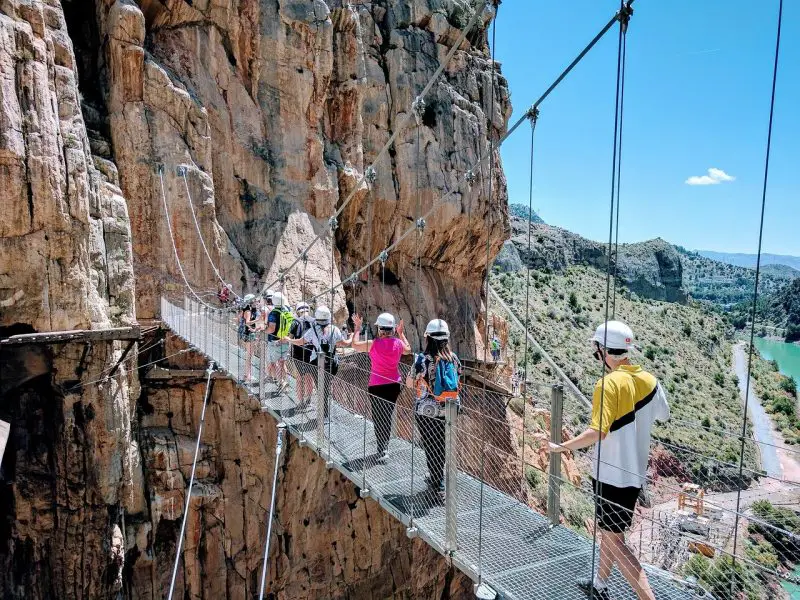
With a length of just 3 km, El Caminito Del Rey is one of the most unusual short hikes in Europe.
This unique trail is unlike others on this list. This world-famous path was built in 1905 above a hydroelectric plant, in the province of Málaga, Spain (link to Spain article). Now the trail is made of narrow wooden paths that cling on the side of the rock face. These wooden paths and suspension bridges hang above the ground at 100 metres.
The sections of the old path from the 20th century can be seen in some places.
There’s a glass-bottomed viewing platform at the highest point of the trail.
El Caminito Del Rey used to be one of the most dangerous hikes in the world, and several people fell to their death. It was closed for some time 20 years ago, but in 2015 it was restored and reopened to the public. Now there are rules and guides to ensure your safety. You have to buy the tickets in advance, as a limited number of tickets are sold every day and they sell out quickly.
It takes between 3 to 5 hours to complete the route.
Visitors can either hike it alone or with a guide.
The trek is linear, not circular. At the end of the hiking route, you can catch a shuttle bus to the starting point or walk.
Hiking tips for beginners
- Choose the right trail for your fitness level. If you are not an experienced hiker, start small.
- Obtain a map of the trail or check the map online. Familiarise yourself with the trail. Take note of other intersecting trails, to prevent making a wrong turn.
- Check the weather and pack accordingly. If there’s a chance of rain, pack a rain jacket and waterproof hiking shoes.
- Get yourself a comfy and sturdy pair of hiking shoes. Do not forget to buy good hiking socks. Trust me, these few extra euros spent on socks are worth it!
- Pack blister dressings and sturdy band-aids. Compeed, Scholl, Band-Aid and Spenco 2nd Skin make great blister pads!
- Pack hiking essentials such as a paper map/smartphone offline map, water, sunglasses, sunscreen, headlamp, first-aid kit, snacks, extra pair of socks, hiking poles. The list of essentials depending on the length and difficulty of your hike. If you are going self-supported, you need to carry a tent, sleeping bag, food, plenty of water, matches, camping cooking gear and utensils and emergency shelter.
- Pack light. You don’t want to drag around all the unnecessary items you’ve packed in your bag.
- Pick a pace you can maintain all day. Do not rush and save your energy.
- Do not disturb wildlife. Observe animals from a distance. Never feed them.
- Leave plants, rocks, seashells and other natural objects as you find them. You are allowed to examine them, but don’t touch and transport them.
- Don’t leave any rubbish. Dispose of it properly.
- Respect other hikers.