
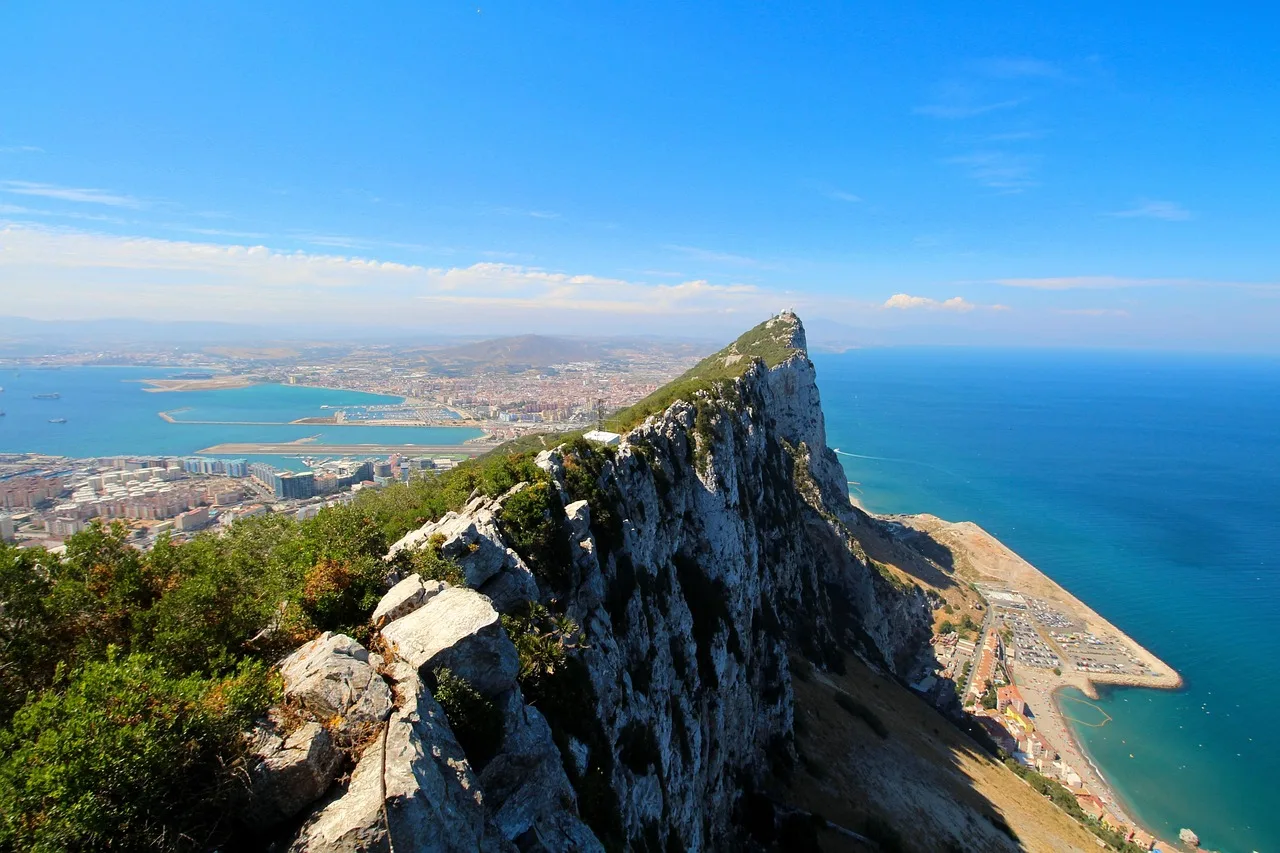
The 300-year-old land border between Spain and Gibraltar effectively disappears on 15 July 2026. Under the newly ratified UK-EU Gibraltar Treaty, La Verja — the fenced checkpoint that has controlled every car and pedestrian crossing between La Línea de la Concepción and the Rock since 1969 — is being dismantled, and routine passport checks at the land frontier are ending for good. Here is exactly what changes, why it took four years of negotiation to get here, and what it practically means if you’re planning to visit Gibraltar or southern Spain this summer.
Quick facts: Gibraltar-Spain border, 15 July 2026
- What’s happening: Physical checkpoints and routine passport checks at the Gibraltar-Spain land border are removed and provisionally applied from 15 July 2026.
- Legal basis: The UK-EU Gibraltar Treaty, agreed in principle in December 2025 and published in full (1,000+ pages, 46 annexes) on 26 February 2026.
- Where checks move to: Gibraltar International Airport and the seaport, under a “double-key” model — Gibraltarian border officers plus Spain’s Policía Nacional carrying out Schengen-style entry checks.
- Gibraltar is NOT joining Schengen: immigration, policing and justice remain under Gibraltar’s own authority; Schengen-style rules apply at the frontier without Gibraltar formally becoming a Schengen member.
- Customs union: Gibraltar joins the EU customs union, removing routine goods inspections for the roughly 15,000 workers who cross the border every day.
- Duty-free shopping ends: Gibraltar introduces a new indirect tax (starting at 15%) and a minimum excise duty of €115 per 1,000 cigarettes.
- Non-EU tourists, including Britons: remain subject to the standard Schengen 90/180-day rule when visiting Spain — crossing into Gibraltar does not reset or bypass it.
- Still to happen: formal ratification by the Council of the EU, the European Parliament, the Gibraltar Parliament and Westminster — 15 July 2026 marks provisional application, not final legal entry into force.
Why the border is opening now: from the Treaty of Utrecht to Brexit
Gibraltar has been a British Overseas Territory since the 1713 Treaty of Utrecht, and the land frontier with Spain has been a flashpoint ever since — most notoriously when General Franco sealed it completely between 1969 and 1985. Even after it reopened, La Verja stayed a fully staffed, physical checkpoint, and every crossing meant a passport check in both directions.
Brexit reopened the question by pulling Gibraltar out of the EU along with the rest of the UK, threatening to turn a fluid daily commute for thousands of cross-border workers into a hard external EU frontier. Spain and the UK spent four years negotiating a solution, reaching a political agreement in principle in December 2025. The full treaty text — more than 1,000 pages and 46 annexes — was made public on 26 February 2026, and Spain has spent the months since physically dismantling its side of the border infrastructure ahead of the 15 July switch-on.
How the new border actually works: the “double-key” model
Instead of checking passports at the land crossing itself, Gibraltar shifts its external border to its airport and seaport. There, Gibraltarian officials carry out local processing first, and Spain’s Policía Nacional then applies Schengen-standard entry checks — a system negotiators have called the “double-key” model because both authorities hold a check on who enters.
A few technical details matter for anyone crossing regularly:
- The EU’s Entry/Exit System (EES) — the biometric system being rolled out at Schengen’s external borders — will not apply at the Gibraltar-Spain land border itself, only at the airport/port checkpoints.
- Spanish officers retain the right to block any non-EU national, including British nationals, on public-security, health or migration grounds, and can deny or revoke residence permits.
- For EU/Schengen citizens — crossing the land border should feel like moving between any two Schengen countries: no routine stop, no stamp.
What it means if you’re not an EU citizen
This is the detail that catches the most travelers out. Removing the physical fence does not exempt non-EU visitors, including UK nationals, from the standard Schengen 90-days-in-any-180-days rule once they are on Spanish soil. Walking across a now-open border does not create a loophole: Gibraltar itself sits outside Schengen’s day-counting rules, but the moment you step into La Línea or anywhere else in Spain, the clock applies exactly as it does at any other Schengen frontier. British retirees and long-stay visitors who currently treat Gibraltar as a base for extended trips into Andalusia should plan their days in Spain the same way they would from any non-EU country.
Before vs after: what changes at the crossing
| Aspect | Before 15 July 2026 | From 15 July 2026 |
| Land border crossing | Physical fence, staffed checkpoint, passport check every time | Fence removed, free pedestrian/vehicle movement, no routine check |
| Where passports are checked | At La Verja itself | At Gibraltar Airport / seaport only |
| Goods / customs | Routine inspections at the border | EU customs union — inspections removed for daily cross-border trade |
| Duty-free shopping | Duty-free status on tobacco, alcohol, fuel | New 15% indirect tax; €115/1,000-cigarette minimum excise |
| EU/Schengen citizens | Passport stamp/check required | Fluid crossing, effectively like an internal Schengen border |
| Non-EU citizens (incl. UK) | Subject to 90/180-day rule in Spain | Still subject to 90/180-day rule in Spain — unchanged |
What this means for flights and Fly & Drive trips
As of now, easyJet and British Airways remain the only carriers serving Gibraltar International Airport, mostly on routes to London Heathrow, London Gatwick and Manchester. No European low-cost carrier has yet confirmed new Gibraltar routes for 2026 — but the logic of the new treaty points that way. With Gibraltar Airport folded into Schengen-style processing and the land border open, it becomes realistic for carriers like Ryanair, Wizz Air or airBaltic to eventually treat GIB as just another southern-Spain gateway, feeding a genuine “Fly & Drive” market: land in Gibraltar or Málaga, pick up a car, and explore the Costa del Sol and Andalusia without a second border stop. Treat any specific new-route announcement as unconfirmed until an airline publishes it — we’ll update this article as routes are confirmed.
Why Gibraltar is worth adding to your Spain itinerary
Even without the border change, Gibraltar packs an unusual amount into 6.8 square kilometres:
- The Rock of Gibraltar — a cable car ride to the top for panoramic views across the Strait to Morocco on a clear day.
- Barbary macaques — Europe’s only wild monkey population, living semi-freely around the Upper Rock Nature Reserve.
- St Michael’s Cave — a limestone cave system used as a concert venue and wartime hospital, now a striking natural sight.
- Great Siege Tunnels — military tunnels carved into the Rock during the 18th-century Great Siege, expanded further in WWII.
- Gibraltar’s duty-free shopping — still worth checking before 15 July, since the new indirect tax changes long-standing price advantages on tobacco, alcohol and fuel.
With the land crossing now frictionless, Gibraltar works well as a half-day or full-day add-on to a Costa del Sol or Málaga trip rather than a separate destination requiring its own border logistics.
FAQ: Gibraltar-Spain border opening
When exactly does the Gibraltar-Spain border open?
Provisional application begins 15 July 2026. Full legal entry into force still requires ratification by the Council of the EU, the European Parliament, the Gibraltar Parliament and Westminster.
Do I still need my passport to cross into Gibraltar?
Yes — carry it. There is no routine check at the land border anymore, but you should still have valid ID/passport on you, since Spanish officers retain the right to carry out checks and can act on public-security or migration grounds.
Is Gibraltar joining the Schengen Area?
No. Gibraltar is not becoming a Schengen member and keeps its own immigration, policing and justice systems. Schengen-style entry-check rules apply at Gibraltar’s airport and seaport instead, under joint Gibraltarian-Spanish processing.
Does crossing into Gibraltar reset my 90/180-day Schengen limit?
No. Non-EU nationals, including UK citizens, remain subject to the standard 90-days-in-180-days rule while in Spain. Gibraltar sits outside that day count, but re-entering Spain does not give you a fresh allowance.
Is duty-free shopping in Gibraltar ending?
Effectively, yes for many goods. A new 15% indirect tax and a minimum excise duty of €115 per 1,000 cigarettes are being introduced, removing much of Gibraltar’s historic price advantage on tobacco and alcohol.
Can I fly directly to Gibraltar from continental Europe?
Not yet on a scheduled low-cost basis. Only easyJet and British Airways currently serve Gibraltar, flying to UK airports. New continental European routes are widely anticipated given the treaty but had not been confirmed by any airline at the time of writing.
Are Latvian and other EU/Baltic travelers affected by the 90/180 rule here?
No. EU citizens are not subject to the Schengen day-count limit when traveling within the EU/Schengen area, so the border change simply means a smoother, checkpoint-free crossing for EU tourists.
Sources
- UK-EU Agreement on Gibraltar: Draft text and next steps – House of Commons Library
- Spain removes Gibraltar border checkpoints after 300 years – ETIAS.com
- Spain begins tearing down border infrastructure with Gibraltar – The Olive Press
- Gibraltar travellers face airport checks as July 15 border switch begins – Euro Weekly News