
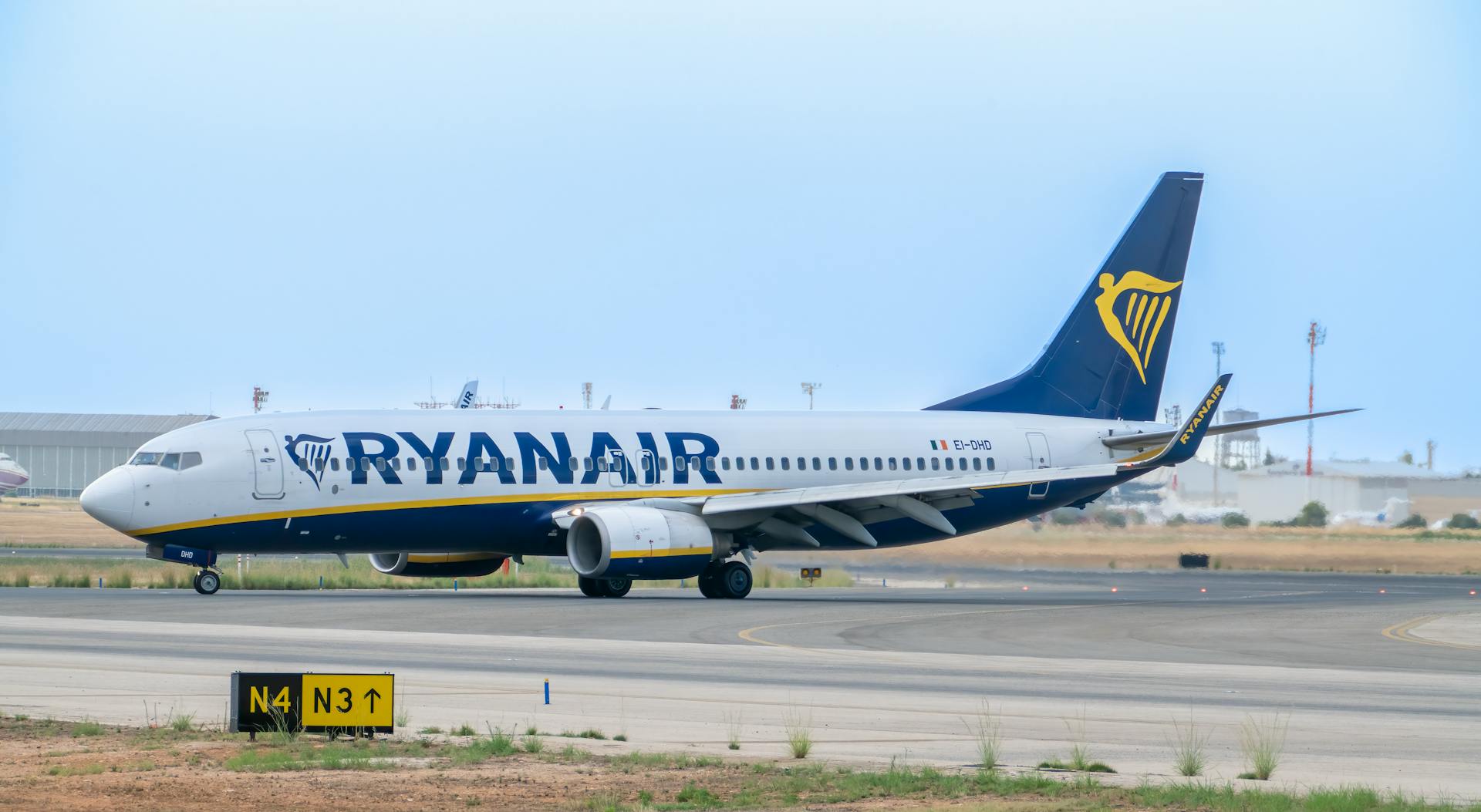
Ryanair’s profit for the April-June quarter (Q1 FY2027) fell sharply, dropping 34% year-on-year to €538 million after-tax, as a doubling in unhedged fuel prices collided with a 6% cut in average fares. Revenue barely moved, edging up just 1% to €4.38 billion, even as passenger numbers grew 6% to 61.3 million – a clear sign that Europe’s largest low-cost carrier had to discount heavily to keep planes full. Here is what happened, and why.
Q1 FY2027 results at a glance
- Profit after tax: €538 million, down 34% from €820 million a year earlier – below the €579 million analysts had forecast.
- Revenue: €4.38 billion, up 1% from €4.34 billion.
- Passengers: 61.3 million, up 6% from 57.9 million.
- Average fares: down 6% year-on-year.
- Load factor: steady at 94%.
- Operating costs: €3.81 billion, up 11%.
A note on the numbers: some reports of these results cite a pre-tax profit figure of approximately €593 million, also down 34%. Ryanair’s headline, most widely reported metric – and the one we can verify with certainty across multiple sources – is the €538 million after-tax profit figure used throughout this article.
Why did profit fall so sharply?
Two forces combined to squeeze margins. First, fuel: Ryanair hedges the bulk of its fuel needs in advance, but the 20% left unhedged saw prices more than double during the quarter, spiking to over $150 a barrel. Second, fares: average ticket prices fell 6% as the airline discounted to keep its planes full. Group CEO Michael O’Leary explained: “The price of our 20% unhedged fuel doubled in the quarter and fares fell 6%, primarily we think due to the impact of the Middle East conflict.”
The knock-on effects of regional instability go beyond fuel markets – the same Middle East tensions have separately been pushing airfares up and visitor numbers down across Southeast Asia, showing how one regional conflict can ripple through global travel demand in very different directions depending on the route.
Why fares fell despite record passenger numbers
O’Leary was direct about the underlying dynamic: Q1 fares “required stimulation as the Middle East conflict led to consumer hesitancy, concerns about EU jet-fuel shortages, economic uncertainty and later bookings.” In practice, that meant Ryanair had to cut prices to keep demand strong enough to fill its record 61.3 million passengers – growth achieved by sacrificing margin rather than pricing power.
A rare bright spot: Ryanair is now debt-free
Despite the profit hit, Ryanair reached a notable financial milestone this quarter: the group became debt-free after repaying its final €1.2 billion bond in May 2026, leaving it with €2.8 billion in gross cash and €2.7 billion net cash. That balance sheet strength gives the airline room to absorb a rough quarter without financial strain.
What’s next: a cautious outlook
Ryanair is not sugar-coating the near-term picture. O’Leary said Q2 pricing is trending modestly down year-on-year, with the final first-half fare outcome “heavily dependent on the strength of close-in bookings.” The airline has declined to issue full-year profit guidance, saying results will hinge on last-minute bookings over the rest of the summer. CFO Neil Sorahan struck a blunter note about the wider industry, warning: “I wouldn’t be surprised to see a number of casualties this winter – there’s a few people very much on the edge.”
What this means for travellers
For passengers, the immediate upside is straightforward: lower fares. Ryanair cutting prices by 6% to stimulate demand is good news if you are booking a trip, and with pricing trending down again into Q2, cheap fares look set to continue in the near term – even as the airline itself absorbs the margin hit. Keep an eye on Ryanair’s ongoing route expansion and regular flash sales for the best deals.
Frequently asked questions
How much did Ryanair’s profit fall in Q1?
Profit after tax fell 34% year-on-year to €538 million, down from €820 million, and below the €579 million analysts had forecast.
Why did Ryanair’s profit drop?
A doubling in the price of its unhedged fuel (20% of total fuel needs) combined with a 6% cut in average fares, which the airline used to stimulate demand amid Middle East-related travel uncertainty.
Did Ryanair carry more or fewer passengers?
More – passenger numbers rose 6% to 61.3 million, with load factor holding steady at 94%.
Is Ryanair still profitable?
Yes. Despite the 34% decline, Ryanair remained solidly profitable at €538 million for the quarter and became debt-free in May 2026 after repaying its final €1.2 billion bond.
Will fares stay low?
Ryanair says Q2 pricing is trending modestly lower year-on-year, though the outlook depends heavily on close-in bookings over the rest of the summer.
Sources: based on reporting from RTE, CNBC and TravelExtra.