
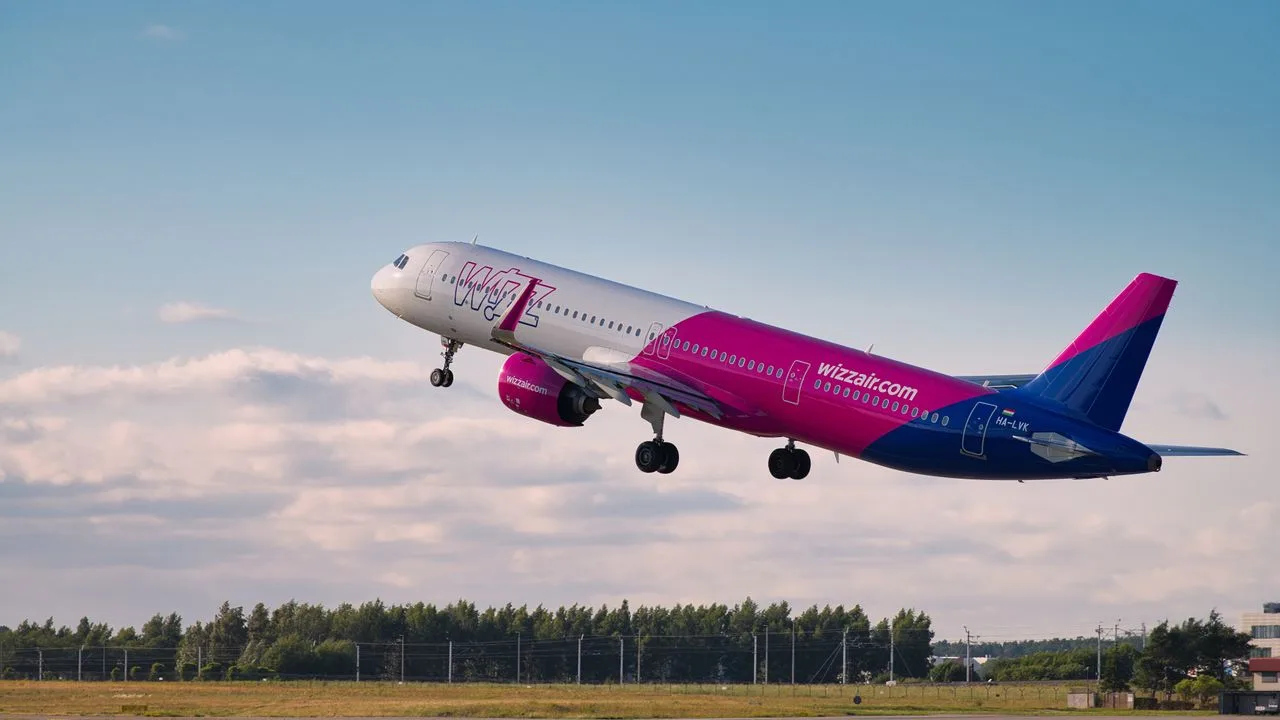
Wizz Air has quietly pulled the plug on its longest-ever scheduled flights. The routes from London Gatwick (LGW) to Jeddah (JED) and Medina in Saudi Arabia – block times approaching seven hours, the longest in the airline’s history – have been withdrawn entirely from its booking system. It marks the effective end of Wizz Air’s ultra-low-cost long-haul experiment with the Airbus A321XLR, just months after the airline talked up plans to grow the very same routes. Here is exactly what happened, why, and what it means for the rest of the airline’s XLR fleet.
Quick facts
- Routes withdrawn: London Gatwick – Jeddah and London Gatwick – Medina, both removed entirely from sale.
- Original A321XLR order: 47 aircraft.
- Converted to standard A321neo: 36 aircraft (announced November 2025).
- Remaining A321XLRs: 11 (6 already delivered, 5 more due in 2026) – but operated identically to standard Neos.
- Trigger: closure of the Wizz Air Abu Dhabi joint venture in September 2025.
What exactly is being scrapped
The London Gatwick-Jeddah and London Gatwick-Medina services were the Wizz Air Group’s longest scheduled flights, and were central to the airline’s pitch that ultra-low-cost carriers could profitably fly long-haul routes once considered the preserve of full-service airlines. Only months earlier, Wizz Air had talked about growing Gatwick-Jeddah to twice daily in 2026 while keeping a daily Medina service – signalling confidence in demand. That confidence has now evaporated, and both routes have been pulled entirely from sale. It follows an earlier setback: Wizz Air had also announced 10 new routes to and from Jeddah and Dammam as part of its wider Saudi ambitions.
Why Wizz Air is giving up on A321XLR long-haul
Group Chief Commercial Officer Ian Malin was candid about the reasoning, telling Aviation Week: “Once we got out of Abu Dhabi, with no longer having a base there…we found that that [the XLR] didn’t fit with our business model.” Crucially, he was clear the issue isn’t the aircraft itself: “There’s nothing wrong with the aircraft. The aircraft is terrific.”
Several factors combined to kill the long-haul strategy:
- Loss of the Abu Dhabi base: Wizz Air Abu Dhabi, a joint venture with the ADQ sovereign wealth fund, closed in September 2025 after nearly five years (it launched in January 2021). Abu Dhabi was meant to be the launch point for the airline’s longer XLR routes – without it, the whole long-haul rationale collapsed.
- The wrong cabin for long-haul: Wizz Air’s high-density, 239-seat, all-economy configuration lacks the premium cabin that typically makes long-haul routes profitable, which limits which routes from continental Europe are viable at all.
- Geopolitical uncertainty: instability across the Middle East disrupted several planned connections and made the airline more cautious about further expansion there.
- Regulatory and airspace complexity: routes to the east face airspace and access restrictions, adding operational complexity for limited payoff.
- No range advantage left to exploit: North Africa – one of the few remaining long-range-ish markets – is already reachable with standard A321neo aircraft, so the XLR’s extra range brings no real benefit there.
- Engine strain in harsh climates: the Pratt & Whitney GTF engines fitted to Wizz Air’s fleet degraded faster than expected in the hot, dusty conditions common on Middle Eastern routes – compounding an engine reliability crisis that has separately grounded around 30 of the airline’s A320/A321neo aircraft since 2023.
Not every long-haul plan under the XLR banner even made it to launch. A planned Milan-Abu Dhabi route was scrapped before its June 2025 debut after Etihad Airways matched Wizz Air’s economy fares on its own Boeing 787 Dreamliners – a price war that left fewer than 6,000 advance tickets sold and made the route commercially unviable.
From 47 XLRs to just 11 “Neos in disguise”
Wizz Air originally ordered 47 A321XLRs. In November 2025, it confirmed that 36 of those would be converted into standard A321neo aircraft, leaving just 11 XLRs in the fleet plan – six already delivered, with the final five due in 2026. Even those 11 will not be used for their headline feature: extended range. As Malin put it: “We’ll operate them as Neos, and we’re not even going to demark them in the system as XLRs. They’re Neos.” The extended range will only be tapped for occasional opportunities or operational flexibility, not as a standing long-haul strategy.
The bigger picture: Wizz Air’s engine troubles
The A321XLR retreat lands against the backdrop of Wizz Air’s long-running Pratt & Whitney GTF engine crisis, which began in 2023 and has cost the airline hundreds of millions of euros in compensation and lost revenue. The engines were found to have a manufacturing defect – contaminated powdered metal that can cause cracking in high-pressure turbine components – forcing early inspections and groundings. Around 30 aircraft remain parked as a result, though Wizz Air has an internal target to have its whole fleet flying again by 2027, with the crisis expected to largely ease by the end of 2026.
What this means going forward
Wizz Air’s message is clear: ultra-low-cost long-haul, at least via the Middle East, is off the table for now. Malin left the door only slightly open: “If opportunities arise to generate higher returns using different operations without added complexity, we’ll consider it.” For now, though, the airline is refocusing the A321XLR fleet on short and medium-haul European and North African routes – the same markets it already knows how to serve profitably with standard Neos. It is a notable reversal for an airline that has otherwise been aggressively expanding its network, including new bases in Madrid and Valencia and 10 new routes from Poland to Egypt.
Frequently asked questions
Which Wizz Air routes were scrapped?
London Gatwick to Jeddah and London Gatwick to Medina, both withdrawn entirely from Wizz Air’s booking system.
Why is Wizz Air ending its A321XLR long-haul flights?
Mainly because it lost its Abu Dhabi base in September 2025, which was meant to anchor the long-haul strategy. Other factors include an all-economy cabin unsuited to long-haul profitability, Middle East geopolitical uncertainty, airspace restrictions, and faster-than-expected engine wear in hot climates.
How many A321XLRs does Wizz Air still have?
11, down from an original order of 47 – 36 were converted to standard A321neo aircraft. The 11 remaining XLRs will be operated identically to Neos.
Is there a problem with the Airbus A321XLR aircraft itself?
No. Wizz Air’s CCO explicitly said the aircraft is not the issue, calling it “terrific” – the decision is about route economics and strategy, not the plane.
Does this affect Wizz Air’s other Pratt & Whitney engine issues?
It’s a related but separate issue. Around 30 Wizz Air aircraft remain grounded due to a Pratt & Whitney GTF manufacturing defect first identified in 2023, with the airline aiming to have its full fleet flying again by 2027.
Is Wizz Air cutting back overall?
No – this is a narrow reversal on long-haul Middle East routes. The airline continues to expand elsewhere, including new bases in Spain and new routes to Egypt.
Sources: based on reporting from Simple Flying, Aviation Week, and Aviation.direct.