
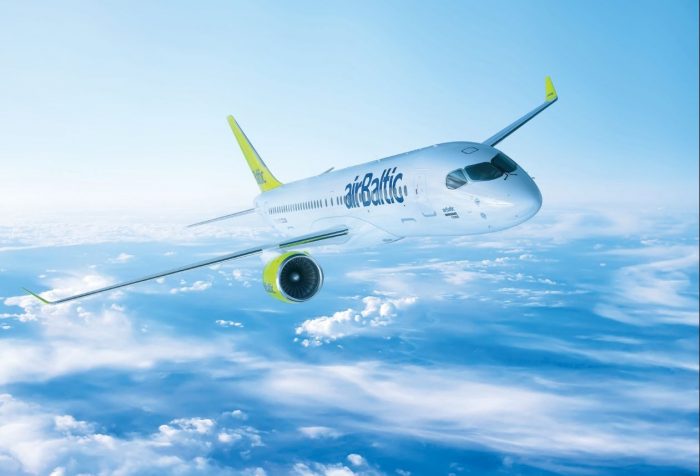
airBaltic filed for Chapter 11 bankruptcy protection in New York on 14 September 2026. The Latvian flag carrier is not shutting down: it has a commitment for €350 million in new financing, flights are operating to schedule, and tickets already bought remain valid. But this is the most serious moment in the airline’s history, and for anyone flying out of Riga, Vilnius or Tallinn it is worth understanding exactly what has happened.
Here is the full picture — what Chapter 11 is, why a Latvian airline filed in an American court, how airBaltic got here, and what it means for your booking.
What happened, in brief
- Date: 14 September 2026
- Court: United States Bankruptcy Court for the Southern District of New York
- Who filed: Air Baltic Corporation AS, together with Air Baltic Training SIA and Baltijas Kravu Centrs SIA (Baltic Cargo Center)
- New money: €350 million (about $405 million) of debtor-in-possession financing, at roughly 12% (SOFR + 8%), subject to court approval
- Who is lending: Strategic Value Partners, Barclays, Hayfin Capital Management, Morgan Stanley and Oaktree Capital Management
- Expected to finish: around June 2027
- Flights: operating as normal; tickets, vouchers and credits remain valid
- CEO: Erno Hildén · Chairman: Andrejs Martinovs
How airBaltic got here: the road to 14 September
This did not happen overnight. The filing is the end of a five-month scramble for money.
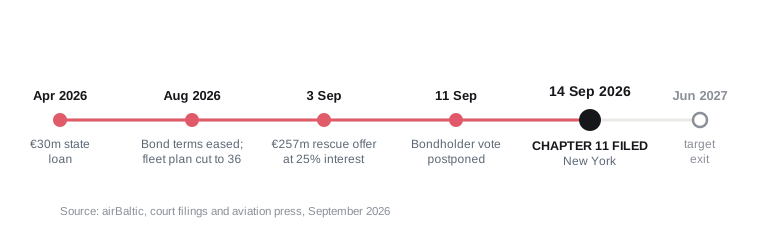
In April 2026 the Latvian state lent the airline €30 million to keep it going. In August, bondholders agreed to soften the terms on the outstanding notes, including deferring interest payments, and the airline published a slimmed-down business plan. In early September a rescue package of €257 million at 25% annual interest was put forward by Polus Capital Management and Klirmark Capital.
It was not enough. According to reporting on the filing, bondholders representing more than 70% of the debt preferred liquidation to that proposal. A creditor vote due on 11 September was pushed back, and three days later the airline went to court in New York instead.
What Chapter 11 actually means — and what it does not
This is the part most worth getting right, because the word “bankruptcy” does a lot of damage it does not always deserve.
Chapter 11 is reorganisation, not liquidation. It is a US legal process that freezes what a company owes, protects it from creditors seizing assets, and gives it a fixed period to renegotiate debts and contracts while continuing to trade. The company keeps running and keeps its management — which is why the term “debtor in possession” exists.
Chapter 7 is the other one. That is liquidation: operations stop, assets are sold, the company ends. airBaltic has not filed for that, and the bondholders who reportedly wanted it did not get it.
For context, this route has been taken before by airlines that are still flying today: United, Delta, American and Air Canada all restructured under court protection and emerged. It has also been the last stop for carriers that did not. Chapter 11 improves the odds; it does not guarantee the outcome.
Why a Latvian airline files in a New York court
It surprises people, and it is a fair question. The answer is practical rather than symbolic:
- The debt is written under US law. Most of airBaltic’s financing agreements are governed by American law, so an American court is the forum that can bind those creditors.
- Chapter 11 has a working rescue-finance mechanism. Debtor-in-possession lending — new money that ranks ahead of existing debt — is standard in the US and lets a company borrow when nobody would otherwise lend. That €350 million package exists because of the process, not in spite of it.
- Its commercial world is already American. Aircraft leasing, insurance and much of the financing sit with US counterparties, and the A220 is partly US-built.
Latvia has no equivalent procedure that could restructure this debt as quickly or bind these lenders as effectively.
The money: what it owes, what it earns, what it just borrowed
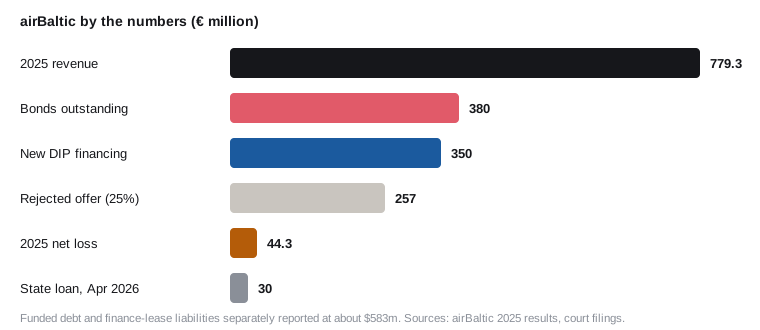
The revealing number is not the loss — €44.3 million on revenue of €779.3 million in 2025 is survivable for an airline. The problem is the debt sitting underneath it: €380 million of bonds, plus funded debt and finance-lease liabilities reported at around $583 million, against an airline carrying 5.2 million passengers a year.
Several things made that debt unpayable at once:
- Fuel. airBaltic was not hedged when the US–Iran conflict sent jet fuel sharply higher. For an airline this size, an unhedged fuel spike is the difference between a thin profit and a cash crisis.
- Russian airspace. Closure removed the Asia connections that made Riga work as a transfer hub, taking with it the higher-value connecting itineraries.
- Engine groundings. The Pratt & Whitney GTF powder-metal inspections took A220s out of service — aircraft that still cost money while parked.
- A seasonal business model. Much of airBaltic’s capacity goes out on wet lease to Lufthansa Group carriers in summer. That pays well in July and leaves winter to be covered from a small home market.
- An expansion plan that never fitted the business. The order book once pointed at 100 aircraft. The airline now expects about 40.
The fleet: from 54 aircraft to 36
airBaltic operates an all-Airbus A220-300 fleet — 54 in service plus two stored. Only 15 are owned; 41 are on dry lease, with DAE and German Operating Aircraft Leasing holding seven each and Azorra six. That matters in Chapter 11, because leases are among the contracts a court process can renegotiate or reject.
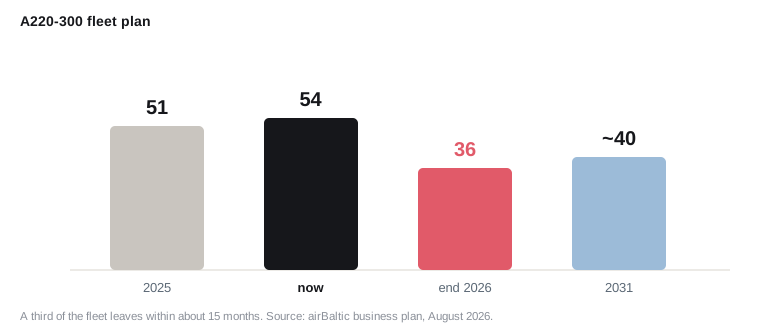
Read that middle drop carefully: the fleet shrinks by roughly a third within about fifteen months. Capacity follows — planned seat-kilometres fall from 9.6 billion in 2026 to 8.7 billion in 2027, before recovering to 10.5 billion by 2031. An airline that flies a third fewer aircraft does not fly the same network.
Who owns airBaltic
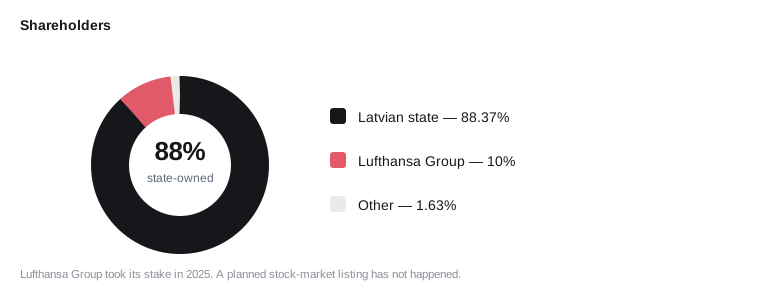
The ownership matters for how this ends. A government that owns 88% of its flag carrier has strong political reasons to keep it flying — connectivity to Riga is a national-interest argument, and Chairman Andrejs Martinovs has framed the priority as protecting Latvia’s connectivity while cutting the airline’s obligations substantially. Lufthansa Group’s 10% stake, taken in 2025, also ties a large European group to the outcome.
What it does not mean is a blank cheque. EU state-aid rules limit how freely Latvia can hand money to a commercial airline, which is part of why the rescue money is coming from investment funds at 12% rather than from the state.
What this means if you have a ticket
For now: nothing changes. airBaltic has said flights operate as scheduled, ticket sales and reservations continue, and existing tickets, vouchers and credits remain valid. Refunds and claims follow the normal policies. You do not need to do anything.
That said, a few sensible precautions cost nothing:
- Pay by card. If you are booking now, a credit or debit card gives you a chargeback route that a bank transfer does not. This is the single most useful protection available.
- Watch your own routes, not the headlines. The real risk to passengers is not the filing — it is the fleet cut. Aircraft leaving the fleet mean routes leaving the timetable, and those are commercial decisions announced with normal notice.
- Keep EU rights in mind. For flights departing the EU, or arriving in the EU on an EU carrier, EU261 still applies to cancellations while the airline is operating: re-routing or a refund, plus compensation where the rules provide it.
- Do not panic-rebook. Cancelling a valid ticket yourself usually costs more than waiting. Nothing announced so far invalidates a booking.
- PINS points: loyalty balances are a liability like any other in a restructuring. There is no announcement affecting them, but if you are sitting on a large balance, using it is lower-risk than hoarding it.
Which routes are actually at risk
airBaltic currently flies 129 routes to 81 destinations, about 123 flights a day, built around Riga with bases in Vilnius and Tallinn. The August business plan already pointed to a refocus on the Riga hub — and that was written before the filing.
With the fleet going from 54 to 36 aircraft, the routes most exposed are the ones airlines always cut first: thin seasonal leisure destinations, frequencies on routes with rail or low-cost competition, and anything flown from a secondary base that could be served from Riga instead. Trunk routes to major European hubs are the safest.
We covered the first wave of this in airBaltic’s Summer 2027 schedule and the routes already cancelled from Riga, Tallinn and Vilnius — worth reading alongside this, because those cuts were announced before the Chapter 11 filing and are the clearest signal of where the network is heading.
What happens next
The court process runs to a rough timetable. First-day motions — the routine approvals that let an airline keep paying staff, fuel suppliers and airports — come immediately. The €350 million financing needs court approval. Then comes the slower work: renegotiating aircraft leases, agreeing terms with bondholders, and filing a plan of reorganisation the court and creditors accept.
airBaltic expects to be out by June 2027. Airline restructurings frequently run longer than planned, so treat that as a target rather than a date.
The questions worth watching are not about whether flights operate next week. They are: how many aircraft leases get rejected, whether Lufthansa Group deepens its involvement or writes off its stake, and how much of the 81-destination network survives a fleet a third smaller.
FAQ: airBaltic Chapter 11
Is airBaltic still flying?
Yes. airBaltic has confirmed that all flights operate as scheduled and that ticket sales, reservations and customer service continue normally throughout the court-supervised process.
Is my airBaltic ticket still valid?
Yes. The airline has stated that existing tickets, vouchers and credits remain valid, and that refunds and claims follow the existing policies. No action is required from passengers.
Is airBaltic bankrupt or is it closing down?
Neither, in the everyday sense. Chapter 11 is a reorganisation process that protects a company from creditors while it renegotiates its debts and keeps trading. Liquidation — the process that ends a company — is Chapter 7, and airBaltic has not filed for that.
Why did a Latvian airline file for bankruptcy in the United States?
Because most of airBaltic’s financing agreements are governed by US law, so a US court can bind those creditors. Chapter 11 also offers debtor-in-possession financing, which is how the airline secured €350 million of new money that would otherwise be unavailable to a company in distress.
Who is lending airBaltic the €350 million?
Strategic Value Partners, Barclays, Hayfin Capital Management, Morgan Stanley and Oaktree Capital Management have committed the debtor-in-possession financing, at an interest rate of roughly 12%. It is subject to approval by the bankruptcy court.
Will airBaltic cancel routes?
The fleet is planned to fall from 54 aircraft to about 36 by the end of 2026, so fewer routes and frequencies are inevitable. Cuts had already been announced in August 2026 as part of a refocus on the Riga hub, before the Chapter 11 filing. Individual route changes are announced separately with normal notice.
Should I still book flights with airBaltic?
Flights are operating and tickets are valid, so booking is not unreasonable. Pay by credit or debit card so you keep a chargeback route, and be aware that the risk to a specific booking comes from route cuts rather than from the filing itself.
When will airBaltic exit Chapter 11?
The airline expects to complete the process by around June 2027. Airline restructurings often take longer than first planned, so that date should be treated as a target.
What happens to my PINS points?
There has been no announcement affecting PINS balances, and the programme continues. Loyalty points are technically a liability in any restructuring, so members holding large balances may prefer to use them rather than accumulate further.
The bottom line
airBaltic has bought itself roughly nine months and €350 million to fix a balance sheet that fuel prices, closed Russian airspace and an over-ambitious fleet plan made unworkable. Flights are running, tickets are good, and the Latvian state has every incentive to see this through.
The change Baltic travellers will actually feel is not the courtroom in New York. It is an airline flying a third fewer aircraft from next year — fewer routes, fewer frequencies, and less of the network that made Riga a hub. That is the story to follow.
Sources: airBaltic statements and court filings of 14 September 2026, as reported by ch-aviation, Aviation Week, AeroTime and RTÉ. Figures are as reported at the time of filing and may change as the case proceeds.
!! IMPORTANT !! We have created a Facebook group to get only the hottest travel deals and error fares. Join now! After that, you are welcome to discuss topics about travelling!
Do not miss the next TRAVEL DEAL! SIGN UP HERE and get exclusive travel offers to your email box.
Accommodation:
Agoda is transforming travel for millions of customers across the globe. Part of Booking Holdings, Agoda is one of the world’s largest online travel accommodation platforms with a network of over 2,000,000 vacation rentals and hotels worldwide.
Cancelled or delayed flight?
If your flight is cancelled or delayed by 3+ hours, you may get a refund of up to €600. Check it out at SkyCop.
eSIM
Stay connected anywhere with an eSIM – unlimited internet for travellers. Get a Yesim and enjoy unlimited data in any destination without roaming fees or local SIM cards. Exclusive offer: Get €3 OFF your Yesim eSIM today.
Tours and excursions:
Discover and book unforgettable tours, activities, and attractions worldwide with GetYourGuide – your ultimate travel companion for authentic local experiences.
Have a look at Trip Advisor as well when planning your holiday to find out what’s hot and what’s not when it comes to all the local attractions.
Car rental:
You can find the best car rental prices at Economybookings.com – easy, affordable, and reliable car hire in over 150 countries.
Insurance:
Worldwide travel medical insurance for Nomads. Only from $37 / 4 weeks worldwide, affordable travel medical insurance for anyone, especially for long-term travellers and digital nomads.
Save money with a Free Debit card:
Free Debit card by Revolut, N26, Monese or Transferwise, etc. with no fees. Get your FREE card: best free debit cards for travellers.
Travel planner
Easily compare and book trains, buses, and flights across Europe and beyond with Omio.