Game-Changer: Wizz Air to Launch High-Speed Starlink Internet on Flights
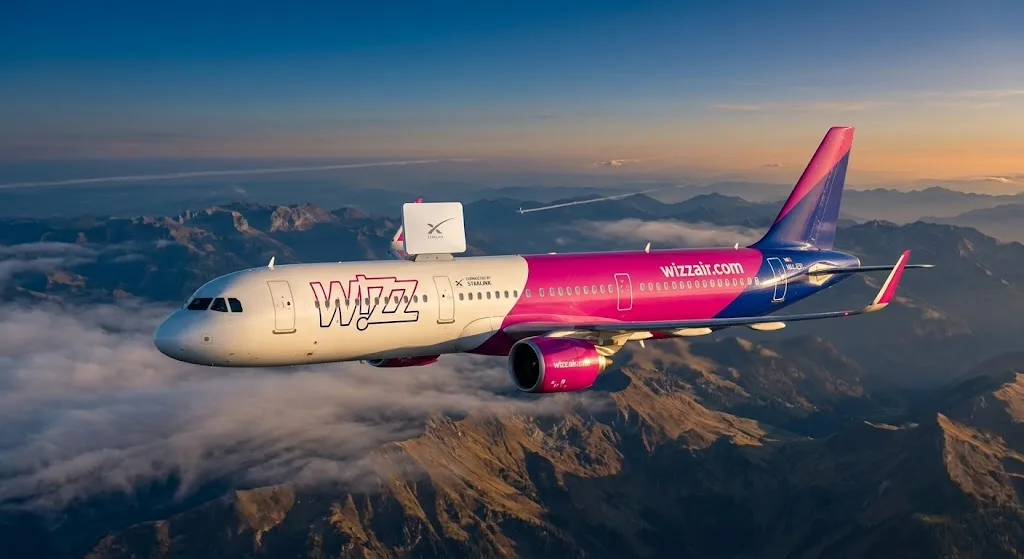
The European aviation landscape is about to get a massive technological upgrade. Hungarian ultra-low-cost carrier Wizz Air has officially announced a landmark agreement with Elon Musk’s SpaceX to roll out high-speed, low-latency Starlink satellite internet across its entire fleet starting in 2027.
According to Wizz Air’s official announcement, this groundbreaking move makes Wizz Air the very first ultra-low-cost carrier (ULCC) in Europe to commit to the technology. It completely flips the script on the traditional budget airline experience, where passengers expect to be completely offline unless they pay premium prices.
Verifiable Facts: The Wizz Air & Starlink Deal
To understand the scale of this announcement, here are the hard facts behind the upcoming rollout:
| Feature | Details & Specifications |
|---|---|
| Launch Timeline | Installations are scheduled to begin progressively in 2027. |
| Fleet Scale | Applies to Wizz Air’s modern fleet of over 260 Airbus A320-family aircraft (primarily targeting newer NEO models). |
| Operating Altitude | Engineered to provide seamless broadband connection at cruising altitudes up to 39,000 feet. |
| Expected Speeds | Low Earth Orbit (LEO) satellites allow passengers to download a full 3-hour HD movie in roughly 3 minutes. |
| Gate-to-Gate Use | Connection remains active even while taxying on the ground, from departure to arrival. |
The Performance: Why Starlink Changes Everything
Unlike traditional, legacy inflight WiFi networks that rely on slow, high-latency geostationary satellites, Starlink operates in a Low Earth Orbit constellation. For the average passenger, this translates to ground-like broadband speeds.
Travelers will easily be able to stream HD videos, play online video games, run video conferences, and scroll social media without the typical lag or dropped connections that plague older systems. Ian Malin, Chief Commercial Officer of Wizz Air, stated that budget flyers “shouldn’t have to choose between affordable fares and reliable internet onboard.”
The Big Catch: Will Wizz Air WiFi Be Free?
This is the exact detail that aviation insiders and budget travelers are watching closely.
As noted in an industry analysis by Simple Flying, Starlink’s commercial terms traditionally prohibit airlines from charging passengers direct access fees for the network. This is why carriers like airBaltic, United Airlines, and Qatar Airways have committed to entirely free WiFi models.
However, Wizz Air has not yet explicitly confirmed whether the internet will be 100% free, paid, or tied to an account login.
Because ultra-low-cost carriers rely heavily on ancillary revenue, experts at Airways Magazine point out that Wizz Air will likely use the Starlink connection portal to drive digital ecosystem engagement. To access the high-speed network, passengers will likely exchange data rather than cash—such as logging into a free WIZZ account, signing up for the WIZZ Discount Club, or viewing targeted digital advertisements.
Massive Pressure on Competitors (Ryanair & easyJet)
Wizz Air’s massive gamble completely breaks the standard budget airline playbook and puts intense pressure on its main European rivals:
- Ryanair: CEO Michael O’Leary has historically rejected onboard WiFi. He argues that the physical weight and aerodynamic drag of satellite antennas add fuel burn expenses that would cost their massive fleet up to $250 million annually.
- easyJet: While they previously held exploratory discussions with Starlink, the airline ultimately concluded that the infrastructure cost model did not align with their low-fare structure.
With legacy giants like the Lufthansa Group already upgrading their short-haul connectivity, Wizz Air bringing Starlink to the budget sector means the era of mandatory “airplane mode” on cheap flights in Europe is officially nearing its end.