The long-awaited rail link directly connecting Istanbul Airport (IST) and Sabiha Gökçen Airport (SAW) has taken a decisive step forward. The Istanbul North Rail Crossing Project, known as INRAIL (also referred to as the Northern Ring Railway Project), has secured a $6.75 billion financing package from six international development banks – making it Türkiye’s largest externally financed rail project to date. Here is what has actually been confirmed, what the numbers mean, and why it matters for anyone flying in or out of Istanbul.
Quick facts: what has actually been confirmed
- Total project cost: approximately $8.3 billion, of which $6.75 billion comes from six multilateral development banks and the rest from the Turkish government.
- World Bank loan approved: $2 billion, confirmed 31 March 2026.
- ADB tranche disbursed: €645.83 million (about $750 million), confirmed 9 June 2026 – the first of two tranches, with the second due in 2028.
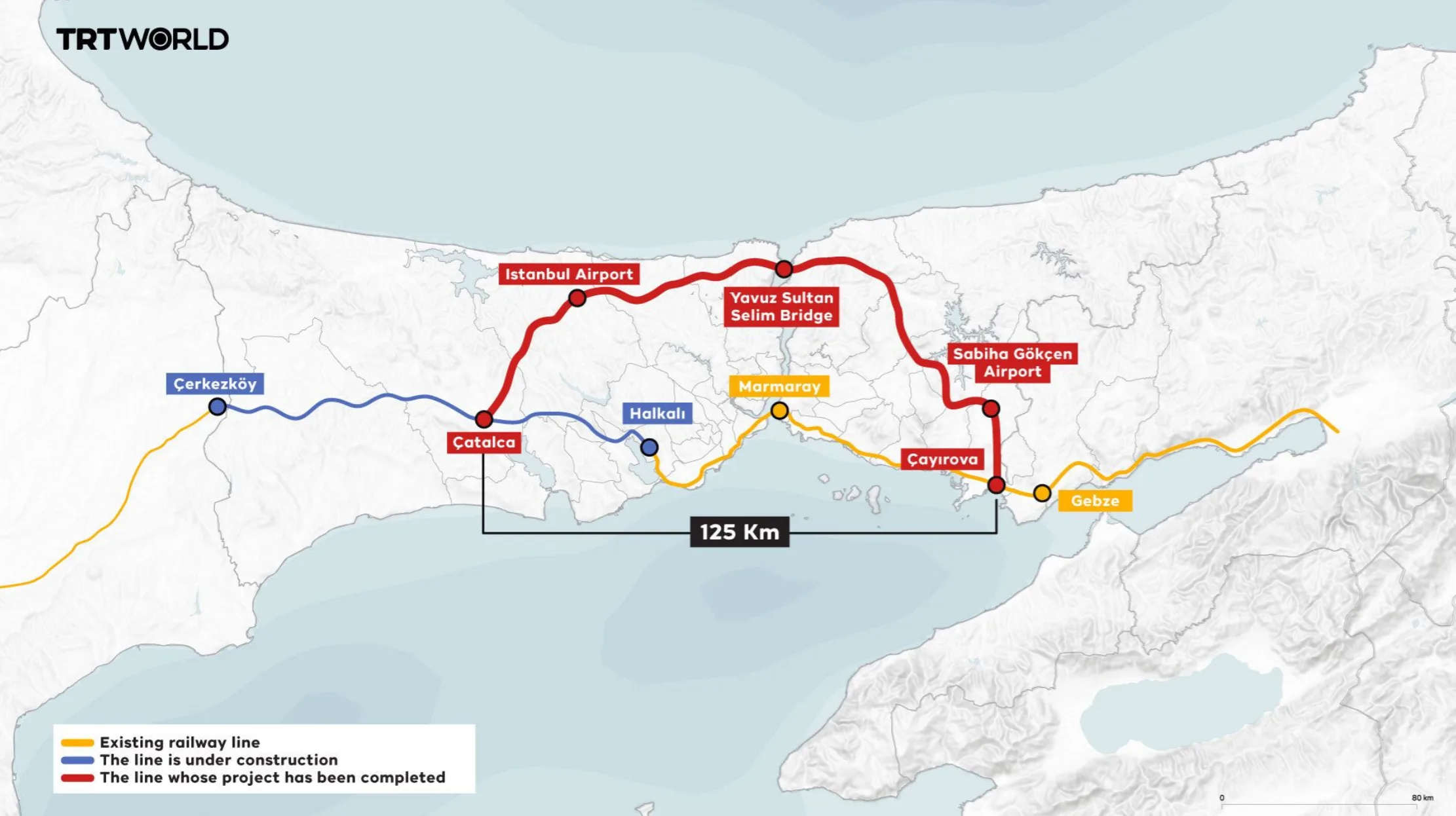
- Route: approximately 126–127 km, double-track and electrified, from Çayırova (Asian side) to Çatalca (European side).
- Tendering target: the Turkish government aims to finalise construction tenders and site handovers within 2026.
Who is actually financing this project?
Coverage of this project has sometimes been vague about exactly who is behind the $6.75 billion. Based on official statements from the lenders themselves, the financing is a coordinated effort by six multilateral development banks:
| Lender | Confirmed amount | Status |
|---|---|---|
| World Bank | $2 billion | Approved 31 March 2026 |
| Asian Development Bank (ADB) | €645.83m (~$750m), first of two tranches | Disbursed 9 June 2026 |
| Asian Infrastructure Investment Bank (AIIB) | Part of $6.75bn package | Confirmed participant |
| European Bank for Reconstruction and Development (EBRD) | Part of $6.75bn package | Confirmed participant |
| Islamic Development Bank (IsDB) | Part of $6.75bn package | Confirmed participant |
| OPEC Fund for International Development | Part of $6.75bn package | Confirmed participant |
World Bank Country Director for Türkiye, Humberto Lopez, called it “a strategic and transformational investment for Türkiye,” while Turkish Transport Minister Abdulkadir Uraloğlu described INRAIL as the country’s “largest externally financed rail project”, saying it would mark “a new era in logistics.”
The route: how the line actually connects IST and SAW
The alignment is designed specifically to avoid Istanbul’s congested city centre by looping around the north of the metropolitan area:
- Starting point: branches off the Marmaray suburban network at Çayırova, on the Asian side.
- Sabiha Gökçen link: the first major stop is directly adjacent to the SAW terminal.
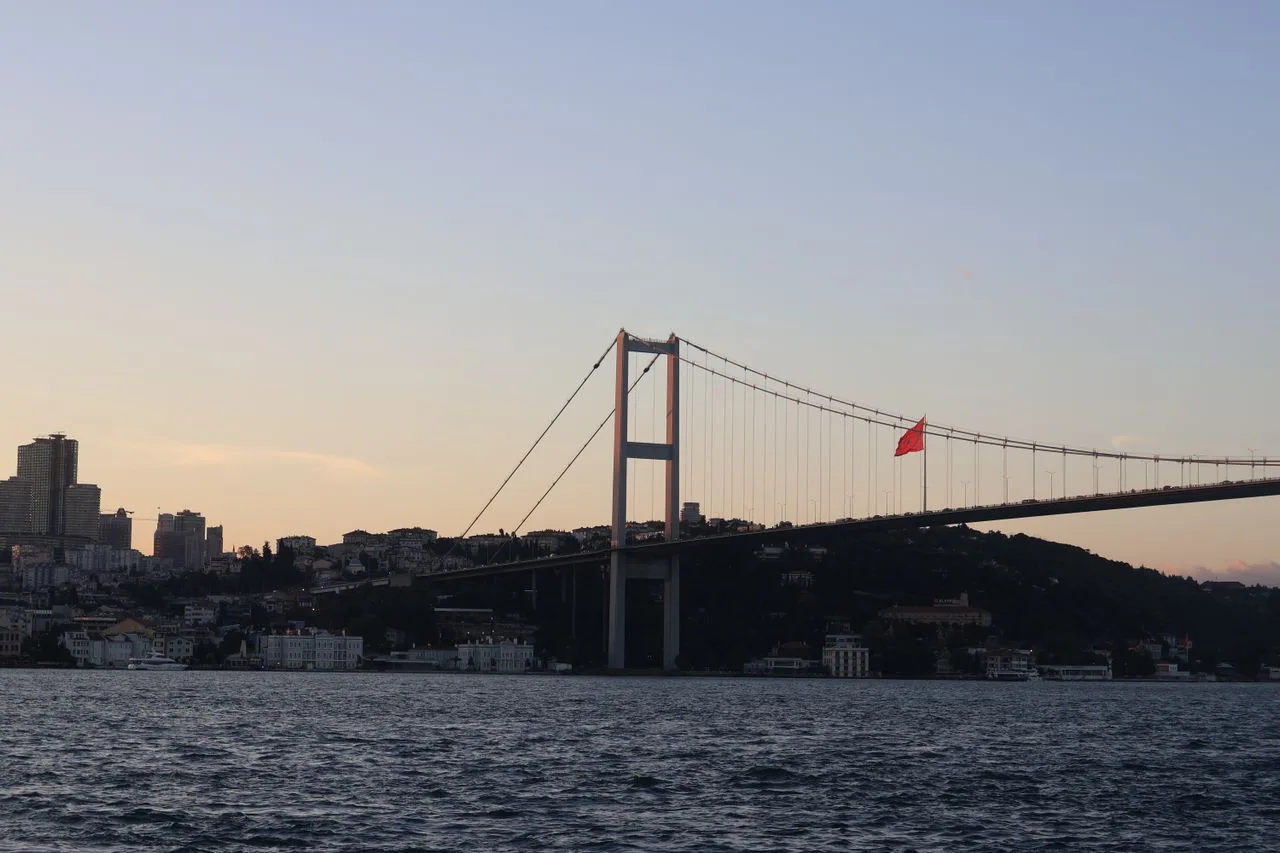
- Bosphorus crossing: trains cross the strait using rail tracks already built into the Yavuz Sultan Selim Bridge – tracks that have sat unused since the bridge opened in 2016.
- Istanbul Airport link: the line then heads west to serve the main IST terminal on the European side.
- Integration point: the route ends at Çatalca, connecting into the under-construction Halkalı–Çerkezköy High-Speed Line – opening a rail path onward into Europe.
Engineering scale: tunnels, bridges and speed
Istanbul’s northern terrain is hilly and heavily forested, which is why the engineering footprint is so ambitious:
| Metric | Figure |
|---|---|
| Tunnels | 44 tunnels, totalling 59.1 km |
| Bridges & viaducts | 42 structures, spanning 22.4 km |
| Share underground/elevated | Roughly half the route |
| Passenger train speed | Up to 160 km/h (signalling built for up to 250 km/h) |
| Freight train speed | 80–120 km/h |
| Passenger capacity | Up to 33 million passengers/year |
| Freight capacity | Up to 30 million tons/year (Turkish government figure) |
A note on the numbers: figures vary slightly depending on the source. Turkish government statements cite 30 million tons of annual freight capacity, while the World Bank frames the improvement differently – noting that current cross-Bosphorus rail freight capacity is limited to roughly 3 million tons a year and could rise to as much as 50 million tons a year once the wider freight network benefits are realised. Either way, the direction is the same: a step-change from today’s bottleneck.
Why the Marmaray line alone isn’t enough
Right now, the only rail crossing of the Bosphorus is the Marmaray immersed-tube tunnel – built primarily for passenger commuter traffic. Freight trains can only use it during limited overnight windows, which throttles Türkiye’s wider rail freight corridors linking Asia and Europe. INRAIL is designed to fix that by giving freight its own dedicated, high-capacity crossing via the Yavuz Sultan Selim Bridge, freeing Marmaray to focus on passengers.
Why this matters for travellers today
Right now, moving between IST and SAW – a distance of about 84 km – is one of Istanbul’s most notorious travel headaches:
- Taxi: around 60–90 minutes in normal traffic, longer during peak hours on the TEM motorway, at a cost of roughly €53.
- Havaişt airport bus: around 2 hours, departing every 45–90 minutes.
- Metro/train with transfers: around 2 hours 6 minutes via multiple connections.
A direct high-speed rail link would cut that multi-hour, multi-transfer ordeal down to a single, predictable journey – a genuine upgrade for anyone connecting between flights, crews, or simply visiting both sides of the city. If you are flying via Istanbul already, see current flights to Istanbul or explore options like an Eastern Mediterranean cruise starting from Istanbul.
Timeline: what happens next
Türkiye’s Ministry of Transport and Infrastructure is fast-tracking procurement, with a target to finalise all construction tenders and complete site handovers before the end of 2026, with heavy construction expected to begin shortly after. No official opening date has been disclosed yet – given the scale of tunnelling and bridge work involved, this will be a multi-year build, so travellers should not expect the line to open imminently.
Frequently asked questions
What is INRAIL?
INRAIL (the Istanbul North Rail Crossing Project, also called the Northern Ring Railway Project) is a planned 126-127 km high-capacity rail line that will directly connect Istanbul Airport (IST) and Sabiha Gökçen Airport (SAW) via a new crossing of the Bosphorus.
How much does the project cost?
The total estimated cost is about $8.3 billion, with $6.75 billion financed by six multilateral development banks and the remainder from the Turkish government.
Which banks are funding INRAIL?
The World Bank, Asian Development Bank, Asian Infrastructure Investment Bank, European Bank for Reconstruction and Development, Islamic Development Bank, and the OPEC Fund for International Development.
How will trains cross the Bosphorus?
Using rail tracks already built into the Yavuz Sultan Selim Bridge, which have been unused since the bridge opened in 2016.
When will the line open?
No opening date has been announced. The government aims to complete construction tenders and site handovers within 2026, with heavy construction to follow – full completion will take several years given the scale of tunnelling involved.
How long does it currently take to get between IST and SAW?
Around 60-90 minutes by taxi, about 2 hours by airport bus, or roughly 2 hours 6 minutes by metro with transfers – covering a distance of about 84 km.
Sources: based on reporting and official statements from the World Bank, Daily Sabah, Asian Development Bank and Tunnelling Journal.