
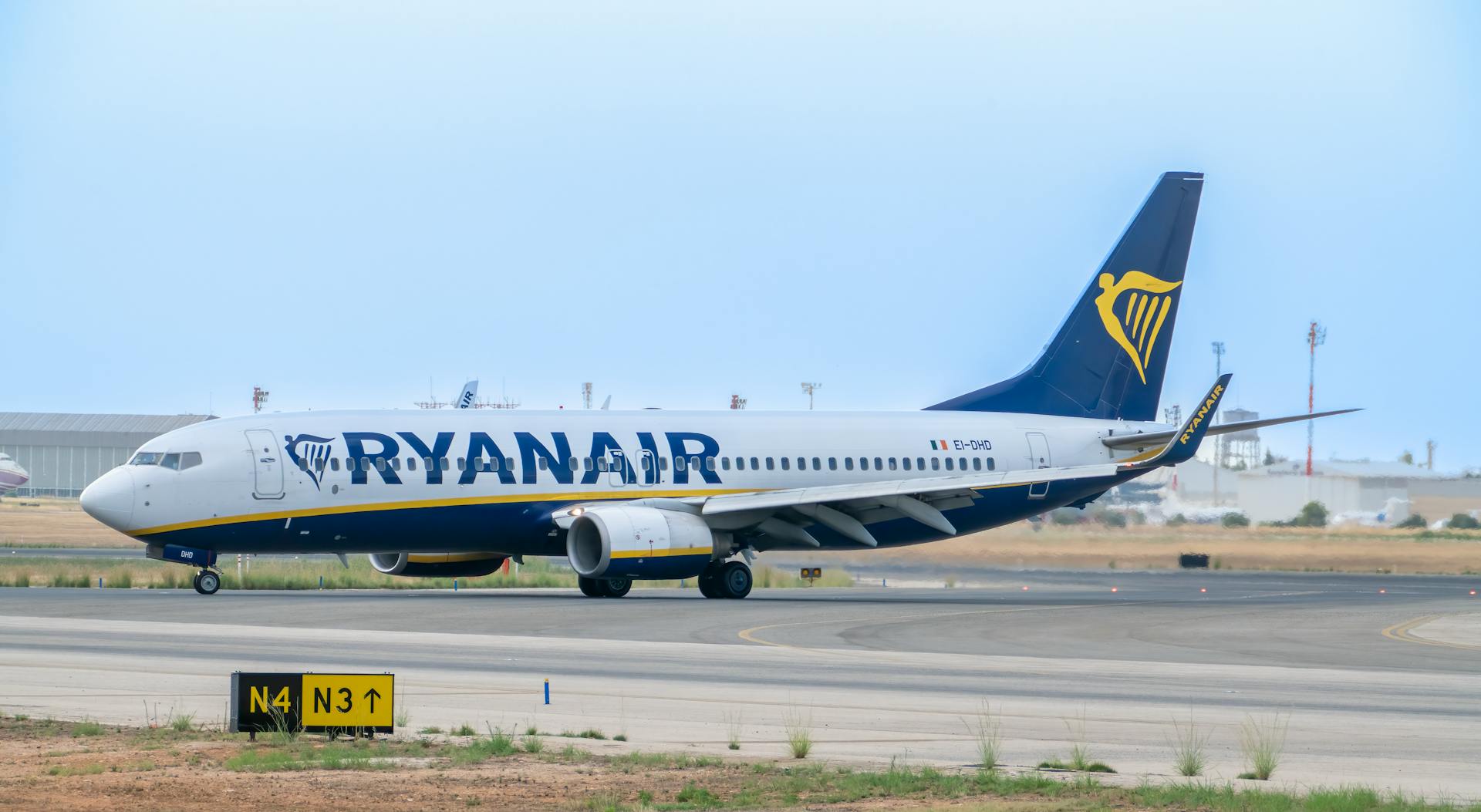
Ryanair will cut more than 1 million seats to and from Spain in the winter 2025/26 season, blaming what it calls “excessive and uncompetitive” airport fee hikes planned by state operator Aena for March 2026. The biggest losses will fall on regional airports and the Canary Islands, with a full withdrawal at several fields.
Aena (Aena S.M.E., S.A.) is Spain’s state-controlled airport operator. It runs 46 airports and 2 heliports in Spain (incl. Madrid-Barajas and Barcelona-El Prat) and is 51% owned by the Spanish state via ENAIRE; the rest of its shares are publicly traded. It also holds stakes in airports abroad and collects regulated airport charges.
 See Spain prices →
Not on an EU phone plan?
Mobile data in Spain from $0.51
EU mobile plans roam here at no extra cost. Visiting from elsewhere? We compared 498 travel eSIM plans, checked daily.
Key points
- Total reduction: ~1,000,000 seats this winter (-41% at regional mainland airports; -10% in the Canary Islands).
- Airports losing all service: Tenerife North (TFN) from the start of the winter season; Vigo (VGO) from 1 January 2026.
- Base closure: Santiago de Compostela (SCQ) two-aircraft base shuts for winter.
- Other big cuts: Zaragoza (ZAZ) −45%, Santander (SDR) −38%, Santiago (SCQ) −38%, Asturias (OVD) −16%, Vitoria (VIT) −2%.
- Routes dropped: 36 connections between regional Spain and the Canaries removed.
- Capacity shift: Ryanair says aircraft will be re-deployed to Italy, Morocco, Croatia, Sweden, and Hungary; growth at Madrid and Barcelona continues.
What’s changing — airport by airport
| Airport | Change this winter |
|---|---|
| Santiago de Compostela (SCQ) | Base closed; capacity down (listed as −38%). |
| Tenerife North (TFN) | All flights suspended from start of winter season. |
| Vigo (VGO) | All flights suspended from 1 January 2026. |
| Zaragoza (ZAZ) | −45% capacity. |
| Santander (SDR) | −38% capacity. |
| Asturias (OVD) | −16% capacity. |
| Vitoria (VIT) | −2% capacity. |
| Valladolid (VLL) | No Ryanair service through winter (closure maintained). |
| Jerez (XRY) | No Ryanair service through winter (closure maintained). |
Canary Islands: across Lanzarote, Fuerteventura, Gran Canaria and others, Ryanair trims ~400,000 seats (–10%) this winter.
Why is this happening?
Aena’s board approved a 6.62% increase in airport charges from March 2026, equivalent to €0.68 per passenger, following a regulator-mandated formula. Ryanair argues the hike is unjustified given Aena’s profits and under-used regional airports; Aena counters that the increase is modest and legally determined.
The row escalated publicly: Aena’s CEO accused the carrier of “blackmail,” while local officials noted that, overall, airline schedules at Spanish airports still point to record winter seat supply (despite Ryanair’s pullback).
What it means for travellers (and how to adapt)
- Expect fewer direct options to regional Spain (especially Galicia, Aragón, Cantabria, Asturias) and lower frequency to the Canary Islands. Prices may rise on remaining flights.
- Check nearby gateways: For Galicia, compare A Coruña (LCG) and Vigo (VGO) alternatives; for Aragón/Cantabria, look at Bilbao (BIO) and Pamplona (PNA); for Canaries, price Tenerife South (TFS) if TFN disappears. (General guidance consistent with published cuts.)
- Compare other airlines: Vueling, Iberia/IB Express and regional carrier Binter Canarias are likely to pick up some demand; Binter has already signalled interest in adding mainland links after Ryanair’s cuts.
- Be flexible on dates/airports and book earlier for peak holiday periods to lock in better fares (particularly around Christmas and mid-term weeks).
What Ryanair says vs. what Aena says
- Ryanair’s position: fees are “excessive,” hurting regional connectivity; capacity will be shifted to countries offering better conditions.
- Aena’s position: the rise is €0.68 per passenger from March 2026, set by law/regulator; it accuses Ryanair of pressure tactics and says the network remains robust with record winter capacity overall.
Source: Euronews / Reuters / CAPA / Cadena SER / Aviation Week